1 Background to Thomas Russell (1836–1912) and Family
1.1 Early Life and Emigration (1836–1853)
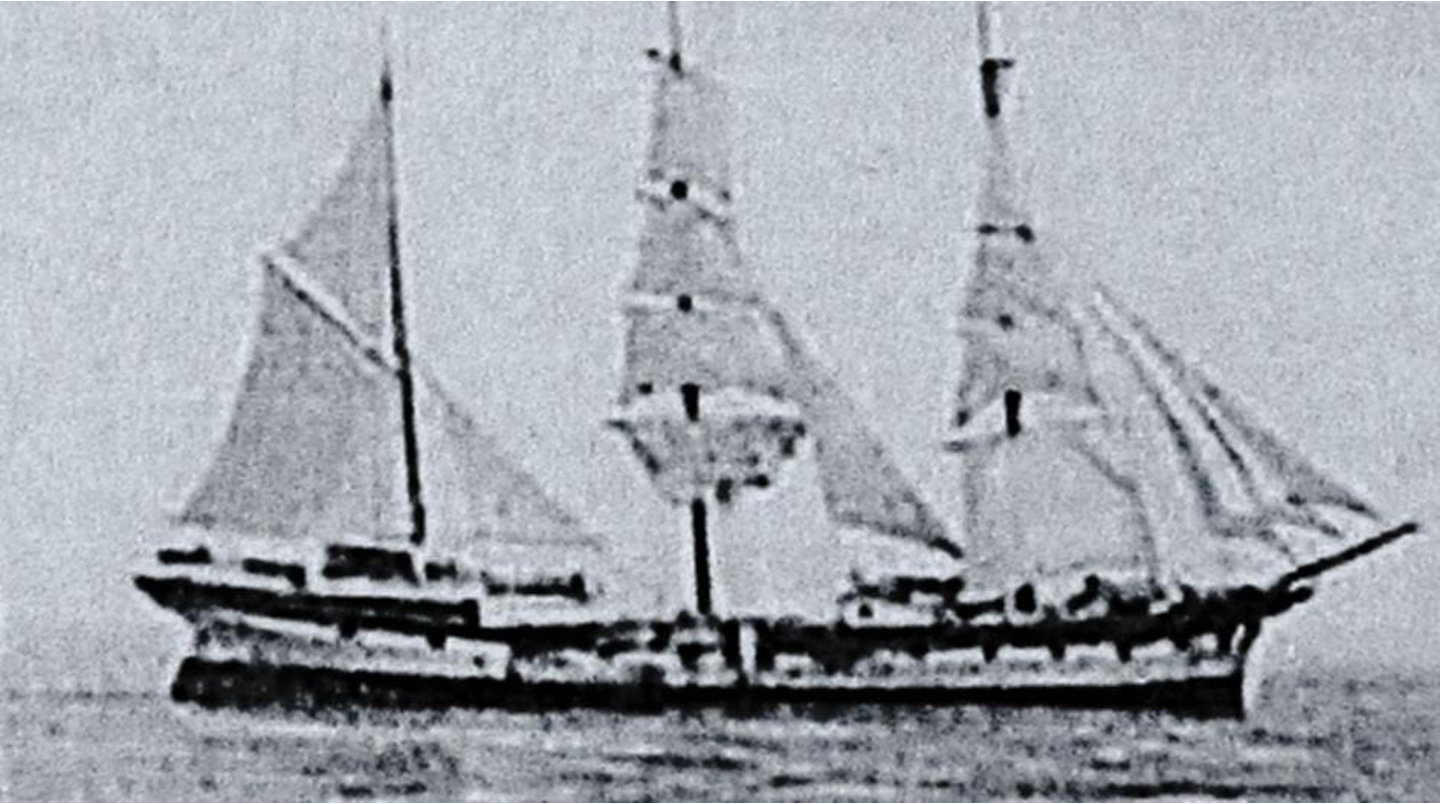
Thomas Russell was born in Haddington, Scotland in 1836 to parents Robert Russell and Agnes Russell née Cameron. At age sixteen, travelling in steerage aboard the Norman Morison (a Hudson’s Bay Company supply ship that made annual journeys between England and Victoria between 1849 and 1853 under Captain David D. Wishart), Thomas set sail on August 14th, 1852 from Gravesend, England. After travelling around Cape Horn, he arrived in Royal Roads, Fort Victoria, on Sunday, January 16th, 1853.
1.2 Craigflower and the Puget Sound Agricultural Company
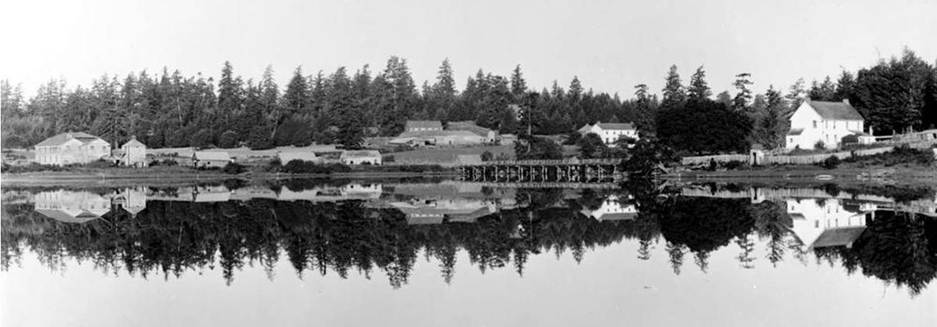
Thomas was the brother-in-law of Kenneth McKenzie, who had been contracted by the Puget Sound Agricultural Company (PSAC)—a subsidiary of the Hudson’s Bay Company—to establish a farm, Craigflower, near Maple Point between Esquimalt Harbour and The Gorge, north of Victoria.
Thomas was listed as a labourer among McKenzie’s employees and was bound by a five-year contract with the PSAC. However, he was clearly not working class and appears to have been well educated - as when Governor James Douglas seconded Robert Barr (who was originally intended to teach at Craigflower) to the Victoria School, McKenzie recommended Thomas as schoolmaster for Craigflower. Thomas, however, declined the position, choosing instead to remain at Craigflower Farm assisting McKenzie with management of the bakery, butchery, and flour mill. The farm supplied British naval vessels at Esquimalt with much of their meat, bread, and vegetables.
Thomas continued working with McKenzie after his PSAC contract expired in 1857.
1.3 Marriage and Family Life
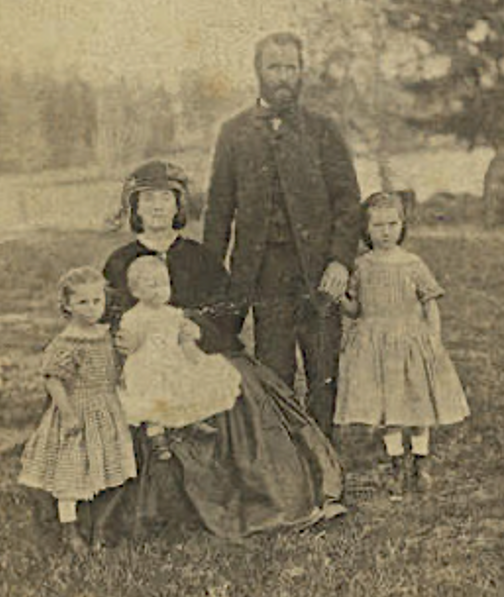
In March 1859 Thomas married an English woman, Sarah Collier (variably spelled Sarah or Sara), who had come to Vancouver Island in 1857 aboard the HBC ship Princess Royal.
Their first child, Alice Marion, was born April 22nd, 1860.
Indications are that Thomas did not intend to renew his PSAC contract when it came due in 1862. In 1861 he agreed to accept, in lieu of the twenty-five acres to which he had become entitled in 1857 upon expiry of his contract, two parcels of land near Craigflower: a three-acre lot adjacent to the school reserve, and a larger nineteen-acre section bounded by the Colquitz River to the north. A contributing factor was that his brother-in-law Kenneth McKenzie’s contract as Craigflower bailiff was not renewed in 1861.
After 1861 Thomas appears to have continued assisting McKenzie with contracts supplying baked goods, beef, and vegetables to British naval vessels anchored at Esquimalt.
Their second child, Catherine, was born March 4th, 1862, followed on March 7th, 1865 by a son, Robert Henry.
1.4 Craigflower School and Educational Controversy (1865–1866)
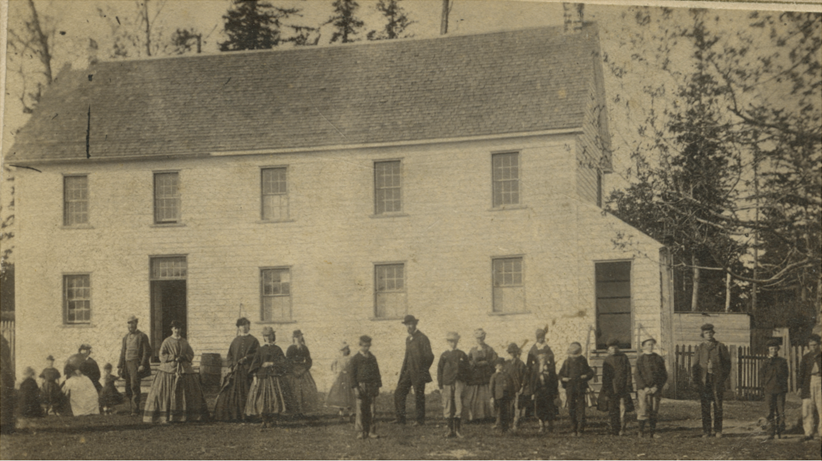
In May 1865 Thomas Russell agreed to fill the vacant position of schoolmaster at Craigflower School following the resignation of the incumbent, Henry Claypole.
Thomas’s tenure at the school was brief — just over a year. He appears to have been an improvement over his predecessor. At the yearly examination on July 19th, 1865, parents remarked that:
“their children have learnt more in two months than in a year before with Mr. Claypole.”
Despite this, in June 1866 the Superintendent of the Board of Education drew attention to the discrepancy between Thomas Russell’s $1,000 annual salary and the $500 paid to teachers in other rural districts, while simultaneously questioning his efficiency. The Board resolved to transfer the assistant teacher from the Fort Street boys’ school in Victoria to Craigflower at a salary of $750 and to dispense with Russell’s services.
In July 1866, despite favourable examination results, the Superintendent reported that Russell was to be discharged for being “by far the least efficient” and for lacking formal teacher training. Notice of one month was to be given.
Possibly having learned of his impending dismissal and having not been paid for September, Thomas resigned abruptly on October 3rd, 1866, writing to the Colonial Secretary, dismissing the children, and informing parents that the school was closed. The Superintendent advised the Board that Russell had left his position to open a grocery store in Victoria without prior notice.
The rancour continued: when Russell later requested his September 1866 salary, the Board declined to recognize the claim.
1.5 Business Ventures and Personal Tragedy
Russell’s Victoria grocery store backed onto the yard of the Bank of British North America (demolished in 1949) on Yates Street. The two-storey building also housed The Colonist newspaper offices upstairs.
Tragedy struck on September 7th, 1869, when his four-year-old son Robert Henry died. The loss deeply affected Thomas, whose diary contains many sorrowful references to his son.
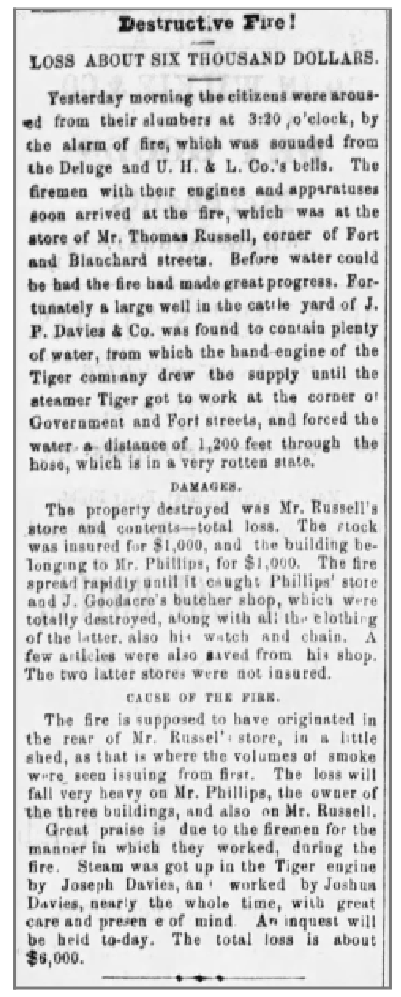
In 1870 Thomas relocated his store to the corner of Blanshard and Fort Streets. In the early hours of July 15th, 1870, the store burned to the ground with total loss, including his books.
1.6 Queen Charlotte Islands and Later Career
The destruction of his business may explain why Thomas accepted the position of Mine Superintendent with the Queen Charlotte Coal Mining Company, a post he held between September 1870 and May 1871.
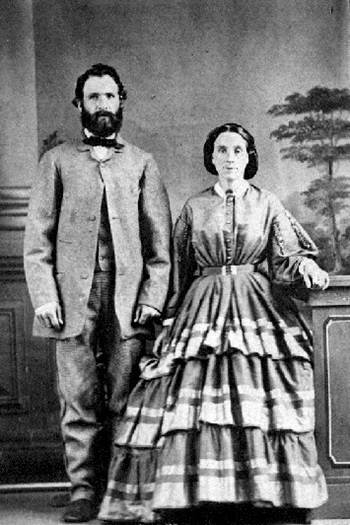
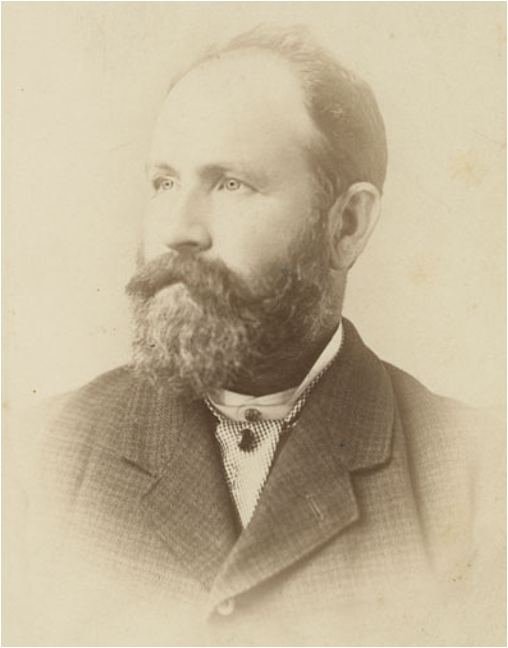
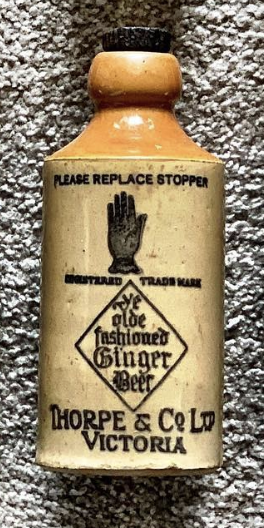
It is not recorded what employment Russell undertook immediately after returning to Victoria from the Queen Charlotte Islands in May 1871. He may have worked as a bookkeeper or accountant. From 1873 to 1902 he served as Assessor and Collector of Taxes for the City of Victoria, and from 1902 until 1912 he was bookkeeper for Thorpe & Co., soda water and soft-drink manufacturers.
1.7 Death and Burial
Thomas Russell died at the residence of his daughter Alice Michael in East Cedar, Vancouver Island, on August 14th, 1912, aged seventy-six. He was buried in grave H74W18 Ross Bay Cemetery, Victoria, on August 17th adjacent his wife Sarah, who had died December 29th, 1905.
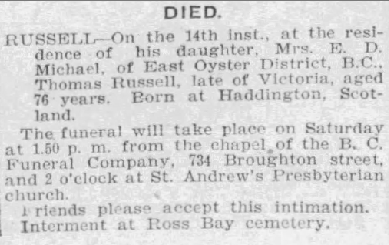
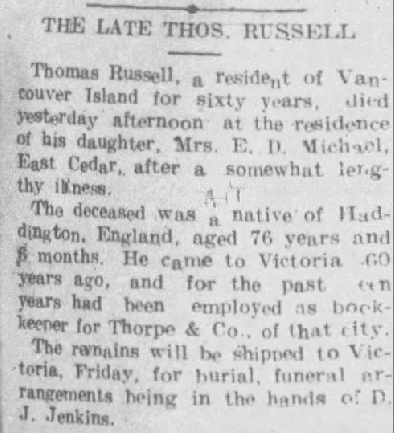
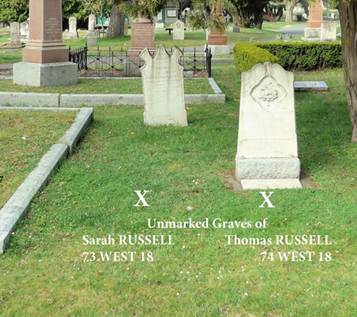
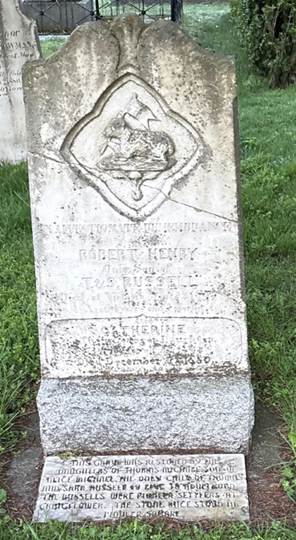
Neither Thomas nor Sarah Russell have individual gravestones. A headstone does, however, commemorate their children Robert Henry and Catherine.
1.8 Solving a Grave Mystery
The headstone shows evidence of breakage, with a large crack across it. A later footstone bears the inscription:
“This grave was restored by the daughters of Thomas Michael son of Alice Michael the only child of Thomas and Sara Russell to live to adulthood. The Russells were pioneer settlers at Craigflower. The stone once stood in Pioneer Square.”
The main stone reads:
IN AFFECTIONATE REMEMBRANCE
of
ROBERT HENRY
Only Son of
T. & S. RUSSELL
Died at Victoria Sept 7th 1869
Aged 4 Years and 5 months
Also
CATHERINE
Their Younger Daughter
Born March 4th 1862
Died December 7th 1880
There is a complex burial history. Robert Henry was originally interred in the Old Burying Ground (now Pioneer Square), where his “Lamb of God” headstone was initially erected. Ross Bay Cemetery records indicate he was later exhumed and reburied in Plot H72W12. Catherine was initially buried in Plot H72W18.
Possibly following Sarah’s death and burial in 1905 (Plot H73W18), the remains of both children were reinterred in Plot H74W18 beside that of their mother. Catherine’s inscription on the headstone may date from this reburial. When Thomas died in 1912 he appears to have been buried in the same plot as his children, though no inscription marks his presence in this grave.
1.9 References
BC Food History Network. Soda Water in B.C. https://bcfoodhistory.ca/soda-water/
Dictionary of Canadian Biography. McKenzie, Kenneth. Volume X (1871-1880) https://www.biographi.ca/en/bio/mckenzie_kenneth_10E.html
https://www.findagrave.com/memorial/121316897/thomas-russell
Michael, Alice née Russell. Undated. The Founding and Building up of Craigflower. Russell family, pers comm.
Old Cemeteries Society of Victoria, British Columbia, Canada. History of Pioneer Square. https://oldcem.bc.ca/cem/cem_pn/history/
Ross Bay Cemetery Records. Onsite in cemetery keepers building safe.
Saanich Archives: Russell Family Fonds
Stricker, Judith. 1983. Hallmark Heritage Society. Colonial Schoolmasters at Craigflower 1859-1870. https://hallmarkheritagesociety.ca/archives/history-articles/colonial-schoolmasters-at-craigflower/
Stricker, Judith. Thomas Russell – Biography by Judith Stricker https://epe.lac-bac.gc.ca/100/205/301/ic/cdc/craigflower/farmfolk/russell2.html?nodisclaimer=1
Vancouver Island GenWeb Project. Ships list of passengers for the Norman Morison 1852 arrived Victoria in January 16 1853. https://sites.rootsweb.com/~bcvancou/ships/nmor53.htm